

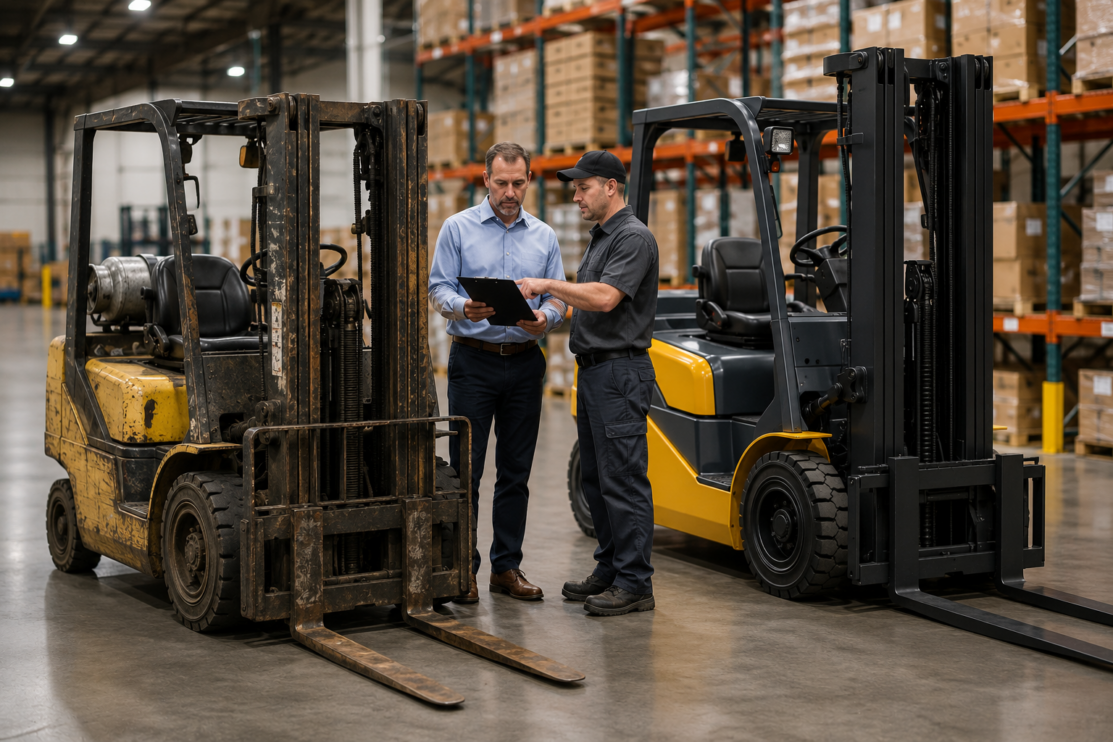
7 Signs It May Be Time to Replace Your Forklift
When Should You Replace a Forklift? 7 Warning Signs to Watch For
Forklifts are among the most important assets in any warehouse, manufacturing facility, distribution center, or industrial operation. When equipment performs reliably, businesses can maintain productivity, improve safety, and keep operations running efficiently.
However, every forklift eventually reaches a point where ongoing repairs and maintenance may no longer be the most cost-effective solution.
Knowing when to replace a forklift instead of continuing to repair it can help businesses reduce downtime, improve operational efficiency, and avoid unexpected costs.
While there is no universal timeline for forklift replacement, several warning signs can indicate that equipment may be approaching the end of its useful life.
Lift Solutions works with businesses across Nebraska, Iowa, Colorado, Kansas, South Dakota, and surrounding service coverage areas to help evaluate equipment performance and identify the best solutions for long-term operational success.
Why Forklift Replacement Matters
Many businesses continue using aging forklifts because the equipment still operates.
However, a forklift that functions does not necessarily operate efficiently.
As forklifts age, businesses often experience:
- Increased maintenance costs
- More frequent downtime
- Reduced productivity
- Higher operating expenses
- Increased safety concerns
- Lower reliability
Recognizing replacement indicators early can help businesses make proactive decisions before equipment failures begin affecting operations.
1. Repair Costs Continue to Increase
One of the most obvious signs that replacement should be considered is rising repair costs.
Occasional maintenance is expected with any equipment, but when major repairs become frequent, ownership costs can quickly escalate.
Common examples include:
- Hydraulic system repairs
- Engine replacements
- Transmission issues
- Electrical system failures
- Mast and lift component repairs
If annual repair expenses continue increasing year after year, replacing the forklift may provide better long-term value.
2. Equipment Downtime Is Impacting Productivity
Downtime affects far more than the forklift itself.
When a forklift is unavailable, employees often need to adjust workflows, delay shipments, or rely on other equipment to complete tasks.
These interruptions can impact:
- Order fulfillment
- Shipping schedules
- Inventory movement
- Labor efficiency
- Customer satisfaction
If equipment downtime is becoming a regular occurrence, replacement may help restore operational reliability.
3. Parts Are Becoming Difficult to Find
As forklifts age, replacement parts can become more difficult and expensive to obtain.
Manufacturers eventually discontinue support for older models, making repairs more challenging and time-consuming.
Long repair delays caused by unavailable parts can create additional operational disruptions.
Businesses relying on older equipment should evaluate whether continued repairs remain practical as parts availability declines.
4. Safety Concerns Are Increasing
Workplace safety should always remain a priority.
Older forklifts may lack modern safety features found on newer equipment.
Additionally, worn components can increase the risk of:
- Brake failures
- Steering issues
- Hydraulic leaks
- Reduced visibility
- Equipment instability
If operators begin reporting safety concerns or equipment performance issues, replacement may provide significant safety improvements.
Modern forklift technology often includes enhanced operator visibility, improved stability systems, ergonomic controls, and other safety-focused advancements.
5. Operating Costs Continue to Rise
Beyond repair expenses, aging forklifts often become more expensive to operate.
Fuel consumption, maintenance requirements, and overall efficiency may decline over time.
Businesses should consider:
- Fuel expenses
- Battery replacement costs
- Service costs
- Labor impacts
- Productivity losses
Evaluating total operating costs rather than repair costs alone often provides a clearer picture of equipment performance.
6. Your Operation Has Changed
Sometimes the forklift itself is not the problem.
Instead, operational requirements have evolved.
Business growth may result in:
- Increased inventory volumes
- Higher lifting requirements
- Additional shifts
- Expanded warehouse space
- New product types
Equipment that once met operational needs may no longer provide the performance necessary to support current workflows.
Upgrading to equipment better suited for present demands can improve productivity and efficiency.
7. New Technology Offers Significant Advantages
Forklift technology has advanced significantly over the past decade.
Modern equipment often provides benefits such as:
- Improved energy efficiency
- Better operator ergonomics
- Advanced safety systems
- Enhanced battery technology
- Telematics and fleet monitoring
- Lower maintenance requirements
Businesses operating older equipment may discover that newer forklifts offer substantial operational improvements that justify replacement.
Repair vs. Replace: Finding the Right Balance
Not every repair means replacement is necessary.
Many forklifts continue providing excellent value for years with proper maintenance and service.
The key is evaluating equipment performance objectively.
Questions businesses should consider include:
- How often is the forklift out of service?
- What are annual repair costs?
- Are safety concerns increasing?
- Is equipment supporting current operational needs?
- Are replacement parts readily available?
- Would newer technology improve productivity?
Answering these questions helps create a more complete picture of equipment value.
The Benefits of Upgrading Your Forklift Fleet
Replacing aging forklifts can provide several operational advantages.
Potential benefits include:
- Improved reliability
- Reduced downtime
- Lower maintenance costs
- Better fuel efficiency
- Enhanced operator comfort
- Improved workplace safety
- Increased productivity
For many businesses, these improvements create measurable returns over time.
Evaluating Equipment with Lift Solutions
Determining whether to repair or replace a forklift is not always straightforward.
Every operation has different equipment requirements, workloads, and budget considerations.
Lift Solutions helps businesses evaluate forklift performance, maintenance history, operational demands, and long-term costs to determine the best path forward.
Whether a company needs a replacement forklift, rental equipment, fleet expansion, or guidance on future equipment planning, making informed decisions can help maximize operational efficiency and reduce unnecessary costs.
Planning for Long-Term Success
Forklifts are critical to daily warehouse operations, but like any equipment, they eventually reach the point where replacement becomes the smarter investment.
By monitoring repair costs, downtime, safety concerns, and operational requirements, businesses can make proactive decisions that improve productivity and reduce long-term expenses.
Investing in the right equipment at the right time helps create safer, more efficient operations while positioning businesses for continued growth and success.


