

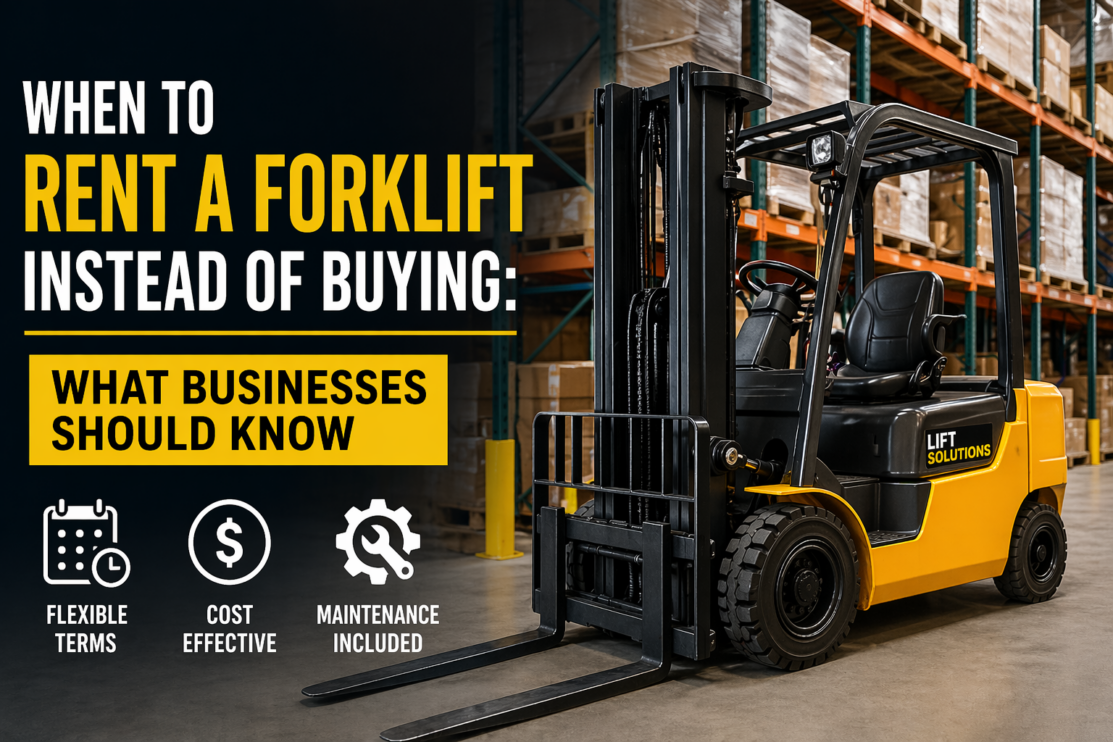
Forklift Rentals vs Buying: When Renting Makes More Sense
Not every business needs to own a forklift.
While purchasing equipment makes sense for some operations, many companies find that forklift rentals offer a more flexible and cost-effective solution depending on their workload, project timelines, and overall business needs.
Understanding when it makes sense to rent a forklift instead of buying can help businesses avoid unnecessary expenses while still keeping operations running efficiently.
For companies that experience seasonal demand, short-term projects, or changing workloads, forklift rentals provide the right solution without the long-term commitment.
Understanding Forklift Rentals
Forklift rentals give businesses access to the equipment they need without the upfront investment of purchasing. Instead of committing to a long-term asset, companies can use equipment for a set period of time based on their needs.
Rental options can range from short-term daily or weekly use to longer-term monthly rentals depending on the situation.
This flexibility allows businesses to scale equipment usage up or down without being locked into ownership.
When It Makes Sense to Rent a Forklift
There are several scenarios where choosing to rent a forklift is often the better option.
Short-term projects are one of the most common reasons businesses rely on forklift rentals. If a company has a temporary job that requires additional equipment, renting allows them to meet demand without purchasing equipment that may not be needed afterward.
Seasonal demand is another major factor. Many businesses experience fluctuations throughout the year. Renting allows them to handle peak periods without carrying the cost of additional equipment year-round.
Unexpected equipment downtime can also create an immediate need. If a forklift breaks down, renting a forklift ensures operations continue while repairs are being completed.
For growing businesses, rentals can serve as a bridge while evaluating long-term equipment needs. Instead of making a large investment right away, companies can test different equipment types before committing to a purchase.
Cost Considerations
One of the biggest factors in deciding whether to rent a forklift or buy is cost.
Purchasing a forklift requires a significant upfront investment, along with ongoing costs for maintenance, repairs, and storage.
Forklift rentals shift those costs into a more predictable expense. Businesses pay for the equipment only when they need it, which can help with cash flow and budgeting.
For short-term or occasional use, renting is often more cost-effective. For operations that rely heavily on forklifts every day, purchasing may make more sense over time.
Maintenance and Service Advantages
Another advantage of forklift rentals is that maintenance and service are often handled by the provider.
This reduces the burden on internal teams and ensures equipment remains in good working condition.
When businesses own equipment, they are responsible for all maintenance, repairs, and downtime.
With rentals, service support is typically part of the agreement, which can reduce unexpected costs and keep operations running smoothly.
Flexibility for Changing Needs
One of the biggest advantages of forklift rentals is flexibility.
As business needs change, rental equipment can be adjusted accordingly. Companies can upgrade, downgrade, or switch equipment types based on their current workload.
This is especially valuable for businesses that are expanding or shifting operations.
Instead of being locked into a specific piece of equipment, rentals allow companies to adapt as needed.
Access to the Right Equipment
Different jobs require different types of forklifts.
Forklift rentals give businesses access to a wider range of equipment without needing to purchase multiple machines.
For example, a warehouse may primarily use electric forklifts but occasionally need a gas-powered unit for outdoor work. Renting allows them to access the right equipment for each task without overinvesting.
Reducing Downtime Risk
Equipment downtime can have a major impact on productivity.
When a forklift breaks down and there is no backup available, operations can quickly slow down or stop entirely.
Having access to forklift rentals provides a safety net. Businesses can quickly replace or supplement equipment to avoid disruptions.
This is especially important for operations that rely on consistent workflow and tight timelines.
Supporting Business Growth
As businesses grow, equipment needs often change.
Forklift rentals provide a way to scale operations without making large capital investments upfront.
Companies can take on new projects, expand their capabilities, and adjust equipment usage without committing to long-term ownership right away.
When Buying May Be the Better Option
While forklift rentals offer many advantages, there are situations where purchasing makes more sense.
Businesses that rely heavily on forklifts every day may benefit from ownership over time.
If equipment is used consistently across multiple shifts, the long-term cost of renting may exceed the cost of purchasing.
Ownership also provides full control over the equipment, which can be beneficial for operations with very specific requirements.
Finding the Right Balance
For many businesses, the best approach is not choosing between renting and buying, but using both.
Owning core equipment while using forklift rentals as needed provides flexibility without sacrificing reliability.
This allows businesses to maintain a strong foundation while still adapting to changing demands.


