

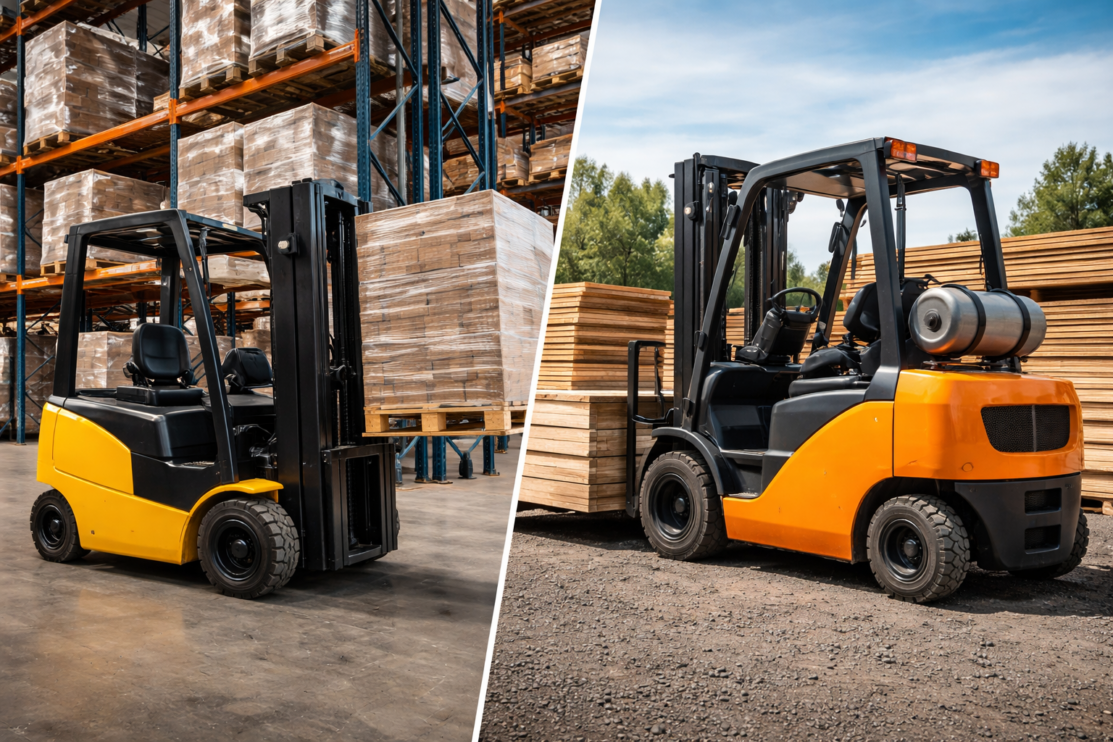
Electric vs Gas Forklifts: Which One Is Right for Your Operation?
Choosing the right forklift for your operation is not always as simple as picking what is available or what you have used in the past. One of the most common questions businesses face when purchasing or upgrading equipment is whether to go with an electric forklift or a gas-powered model.
Both options have their place depending on the type of work being done, the environment they operate in, and long-term operational goals.
Understanding the differences between electric and gas forklifts can help businesses make smarter decisions that improve efficiency, reduce costs, and support day-to-day operations.
Understanding the two types of forklifts
Before comparing the two, it is important to understand what separates electric forklifts from gas-powered forklifts.
Electric forklifts are powered by rechargeable batteries. They are commonly used in indoor environments such as warehouses, distribution centers, and manufacturing facilities where emissions and noise need to be controlled.
Gas forklifts, which may run on propane, gasoline, or diesel, use internal combustion engines. These are often used in outdoor applications or environments where heavier lifting and longer run times are required.
Each type is designed to solve different operational needs.
Where electric forklifts perform best
Electric forklifts have become increasingly popular, especially as warehouse operations continue to evolve.
One of the biggest advantages of electric forklifts is their ability to operate cleanly indoors. Because they do not produce exhaust emissions, they are ideal for enclosed environments where air quality is a concern.
They also tend to operate more quietly than gas-powered forklifts, which can improve the working environment for employees.
Electric forklifts are commonly used in:
- Warehouses with narrow aisles
- Distribution centers with high inventory turnover
- Food and beverage storage facilities
- Retail and indoor logistics operations
Another benefit is their smoother operation. Electric forklifts provide consistent acceleration and handling, which can make them easier to operate, especially in tight spaces.
Maintenance is also typically more straightforward. Without an internal combustion engine, there are fewer moving parts to service, which can reduce maintenance costs over time.
However, electric forklifts do come with limitations that need to be considered.
Battery charging and runtime are two of the biggest factors. If operations run across multiple shifts, businesses may need additional batteries or charging infrastructure to keep equipment running consistently.
Where gas forklifts perform best
Gas forklifts are known for their power and versatility, especially in more demanding environments.
These forklifts are commonly used outdoors or in applications where lifting heavier loads is required. They are also well suited for uneven terrain and longer operating hours.
Gas forklifts are often used in:
- Construction sites
- Lumber yards
- Outdoor storage facilities
- Manufacturing operations with heavy materials
- Shipping and receiving areas with high throughput
One of the biggest advantages of gas forklifts is their ability to run continuously without needing to stop for extended charging periods. Refueling is quick, which makes them ideal for operations that cannot afford downtime.
They also tend to handle heavier loads more efficiently compared to many electric models.
That said, gas forklifts do require more maintenance. Engines, fuel systems, and exhaust components need regular servicing to keep them running properly.
Comparing operating costs
When evaluating forklifts, cost is always a major consideration. However, it is important to look beyond the initial purchase price and consider long-term operating costs.
Electric forklifts often have higher upfront costs due to battery systems and charging equipment. However, they typically have lower operating costs over time.
Electricity is generally less expensive than fuel, and maintenance costs are often reduced due to fewer mechanical components.
Gas forklifts, on the other hand, may have a lower initial purchase price but can incur higher long-term costs.
Fuel expenses, engine maintenance, and more frequent servicing can add up over time.
The best choice depends on how often the equipment is used, the type of work being performed, and how long the business plans to keep the equipment.
Indoor vs outdoor use
One of the simplest ways to narrow down the decision is to consider where the forklift will be used.
Electric forklifts are typically the better choice for indoor use. They produce no emissions, operate quietly, and are well suited for smooth warehouse floors.
Gas forklifts are often the better option for outdoor use or mixed environments. They provide more power and are better equipped to handle rough surfaces and weather conditions.
Some businesses operate both types to cover different needs within their operation.
Maintenance considerations
Maintenance is another key factor when choosing between electric and gas forklifts.
Electric forklifts generally require less maintenance. There are no oil changes, fewer filters, and fewer moving parts overall.
However, battery maintenance is important. Proper charging, watering (for certain battery types), and storage practices are necessary to maximize battery life.
Gas forklifts require more routine maintenance. This includes oil changes, spark plugs, fuel system checks, and regular engine servicing.
While maintenance may be more involved, gas forklifts are often easier to refuel and can stay in operation longer without interruption.
Performance and efficiency
Performance can vary depending on the specific model, but there are general differences between electric and gas forklifts.
Electric forklifts offer smooth, consistent performance. They are highly efficient for indoor tasks and can improve maneuverability in tight spaces.
Gas forklifts typically provide more raw power. They are better suited for lifting heavier loads and handling more demanding applications.
Efficiency ultimately depends on how the equipment is being used.
For example, a warehouse focused on fast, repetitive movement may benefit more from electric forklifts, while a construction or outdoor operation may require the strength and durability of gas-powered equipment.
Environmental impact
More businesses are considering environmental impact as part of their decision-making process.
Electric forklifts are generally more environmentally friendly. They produce zero emissions during operation and can help reduce a company’s overall carbon footprint.
Gas forklifts produce emissions, which may be a concern for certain industries or facilities with strict environmental regulations.
For companies focused on sustainability, electric forklifts are often the preferred choice.
Making the right decision for your business
There is no one-size-fits-all answer when it comes to choosing between electric and gas forklifts.
The right choice depends on several factors, including:
- The environment where the forklift will be used
- The type and weight of materials being handled
- Daily operating hours and shift requirements
- Budget and long-term cost considerations
- Maintenance capabilities and resources
In many cases, businesses benefit from evaluating their current operations and identifying where efficiency can be improved.
Working with a knowledgeable equipment provider can help identify the best solution based on specific operational needs.
When it makes sense to use both
For some operations, the best solution is not choosing one over the other, but using both.
It is common for businesses to use electric forklifts indoors for warehouse operations and gas forklifts outdoors for heavier or more demanding tasks.
This approach allows companies to maximize efficiency while ensuring they have the right equipment for each environment.
Choosing between electric and gas forklifts is an important decision that can impact productivity, costs, and long-term operations.
Electric forklifts offer clean, quiet operation with lower maintenance needs, making them ideal for indoor environments.
Gas forklifts provide power, flexibility, and longer run times, making them better suited for outdoor and heavy-duty applications.
By understanding the differences and evaluating operational needs, businesses can make informed decisions that support efficiency and growth.
The goal is not just to choose a forklift, but to choose the right equipment that keeps your operation running at its best.


